The Tasmanian Institute of Agriculture (TIA) Dairy Research Facility in north-west Tasmania has achieved certification of an Environmental Account with Accounting for Nature, establishing a verified baseline of soil and native vegetation condition across the working dairy farm. Led by Cradle Coast NRM in partnership with TIA, an on-farm demonstration is showing how natural capital accounting can help farmers understand, manage and improve the natural assets that underpin productive and resilient farming systems.
As expectations around environmental stewardship grow, agricultural businesses are increasingly being asked to demonstrate how they manage their natural assets. Australia’s legislated Nature Repair Market and emerging environmental markets are also prompting questions about the potential opportunities these could provide for Tasmanian farmers and landowners.
Natural capital includes the soils, water, native vegetation, trees and other natural assets that support farm productivity, profitability and resilience. Natural capital accounting helps farmers measure and monitor the condition of these assets over time, identify potential risks and make informed management decisions that protect and improve their value, supporting both farm businesses and the environment.
Consistent with global environmental accounting standards, the demonstration has established an Environmental Account for the TIA Dairy Research Facility with Accounting for Nature verifying the baseline condition of the soil and native vegetation across the property to help inform sustainable land management and research activities across the property.
“The certified account with Accounting for Nature provides clarity and transparency to our commitment to looking after the environment here at the TIA Dairy Research Facility.” James Hills, Centre Leader (Livestock Production), TIA.
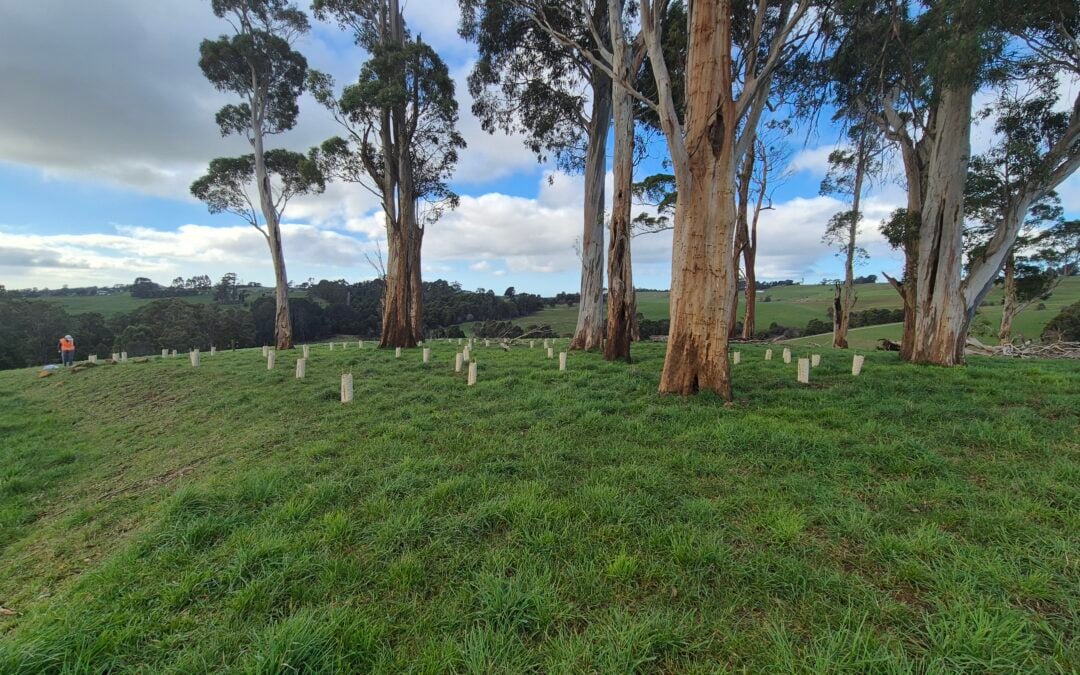
Since the baseline environmental condition was measured, Cradle Coast NRM and TIA have undertaken practical actions across the farm to maintain and enhance the condition of vegetation across the property. These actions include protecting existing vegetation through weed control, planting native vegetation buffers around waterways and dams, establishing new shelterbelts and enhancing paddock trees for stock shelter and biodiversity.
These management actions aim to demonstrate practical steps that other farmers can also readily implement on their own properties that can support farm natural capital resilience, benefit farm productivity, with an additional aim of showing a certified up-tick in the condition and extent of vegetation consistent with current and emerging natural capital and carbon markets.
This project is supported by the Australian Government through funding from the Natural Heritage Trust under the Climate-Smart Agriculture Program and delivered by Cradle Coast NRM, a member of the Commonwealth Regional Delivery Partners panel in partnership with Tasmanian Institute of Agriculture with support from Dairy Australia.