
Land

Protecting and Strengthening Land Assets for a Resilient Future
The Land Theme identifies how NRM organisations partner with land managers to support sustainable natural and production landscapes and industries in a changing environment.
Cradle Coast Authority aims to respect and acknowledge Aboriginal understanding of land and Country, conserve natural, cultural and production values associated with these assets, and to build capacity and develop resilience across these assets to protect them from ongoing and emerging threats.
Land assets encompass topography and the soils that support agriculture, plantation forestry and natural ecosystems, the vegetation that covers and protects these soils, and cultural heritage values.
Impacts to natural and cultural values, soil condition and vegetation are projected due to changes to land use, management practices and biosecurity threats.
Local threats and impacts can be compounded when combined with the global impacts of climate change (including changes in weather patterns and increased frequency and severity of extreme weather).
Asset Classes of Healthy Country, Resilient Landscapes and Soils and Vegetation have been developed to address these issues. Maintenance of healthy landscapes, soil and vegetation are essential components of all ecosystems – rural and urban, aquatic and terrestrial, domestic and wild. It is therefore acknowledged that the Land Theme is inextricably linked to the Themes of Water and Biodiversity, particularly in supporting vital ecosystem services.
There are Priorities and Actions relevant to sustainable land management in all Themes, such as catchment management planning, soil erosion and nutrient management and the management of important vegetation communities, including riparian vegetation.


Healthy Country
Supporting Tasmanian Aboriginal people to increase capacity to manage, access or heal Country, based on self-determined priorities.

Resilient Landscapes
Building the capacity of land managers to address the risk of adverse events, protect natural capital, and take advantage of opportunities for production industries in the face of challenges such as climate change, weeds, pests and diseases.

Soils & Vegetation
Supporting land managers to improve soil condition and manage vegetation cover to improve natural values, biodiversity, and production outcomes and mitigate emerging risks.
Land in Tasmania
A snapshot of Tasmania’s land assets
77 Parcels of Aboriginal Managed Land
63,930 ha is under management by Aboriginal land authority
Indigenous Protected Areas include Preminghana, Risdon Cove, Putalina, Mount Chappell, Badger Island, Babel Island, Great Dog Island, lungtalanana
28% Farmland
18,900 km2 of Tasmania is used for farming
Sheep farming (2,646 km2), beef cattle farming (5,670 km2), dairy farming (3,591 km2) and vegetable farming (2,079 km2) account for 56% of agricultural land area
2,171 Farm Businesses
Generated $1.68B during 2018–19, increasing from $1.48B during 2015–16
Milk ($475M), cattle and calves ($342M) and potatoes ($127M) accounted for 57% of statewide agricultural production
18 Irrigation Schemes
Operated by Tasmanian Irrigation (GBE), the schemes supply over 85,000 ML of water to agriculture per year
Dial-Blythe, Duck, Cressy Longford, Great Forester, Greater Meander, Kindred-North Motton, Lower South Esk, Midlands, North Esk, Sassafras Wesleyvale, Scottsdale, Sorell, South East (Stages 1 & 2), Southern Highlands, Swan Valley, Upper Ringarooma, Whitemore, Winnaleah
37% of Farms with Conservation Areas
Combined total of 110,770 ha
812 Tasmanian farm businesses have an area of land set aside for conservation or protection purposes
812K Hectares of Production Forest
Total area on public land
434k hectares of timber reserves on private land. 283k plantation forest across tenures. Annual value of $1.2B to the Tasmanian economy
Current NRM Land Projects & Initiatives
Carbon that Counts
About the project Carbon that Counts is working with Tasmanian farmers to build practical evidence on how carbon accounting can add value for farming businesses - whether through cost savings, market opportunities, or better farm management - and to develop useful...
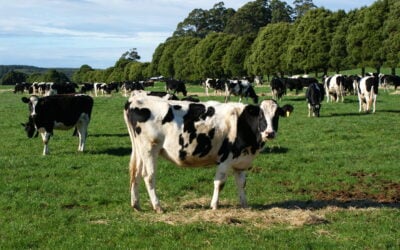
Dairy Resilience Program
About the project The Dairy Resilience Project is led by Soils for Life alongside Cradle Coast NRM and other regional partners around Australia. Over the next three years we will be working with Soils for Life to support dairy farmers to build soil health and climate...

Our Natural Advantage: Building the benefits of biodiversity on farms
About the project As farmers are increasingly exposed to variable climate conditions and changing market expectations around sustainability, it can be hard to decide on the best course of action to ensure they remain viable – Our Natural Advantage supports farmers to...

Sustainable Agriculture Facilitator (SAF)
About the project A designated central contact point for farmers, landholders, industry, and community groups, the Sustainable Agriculture Facilitator aims to engage and inform those involved in agricultural industries across the Cradle Coast region about...