About the project
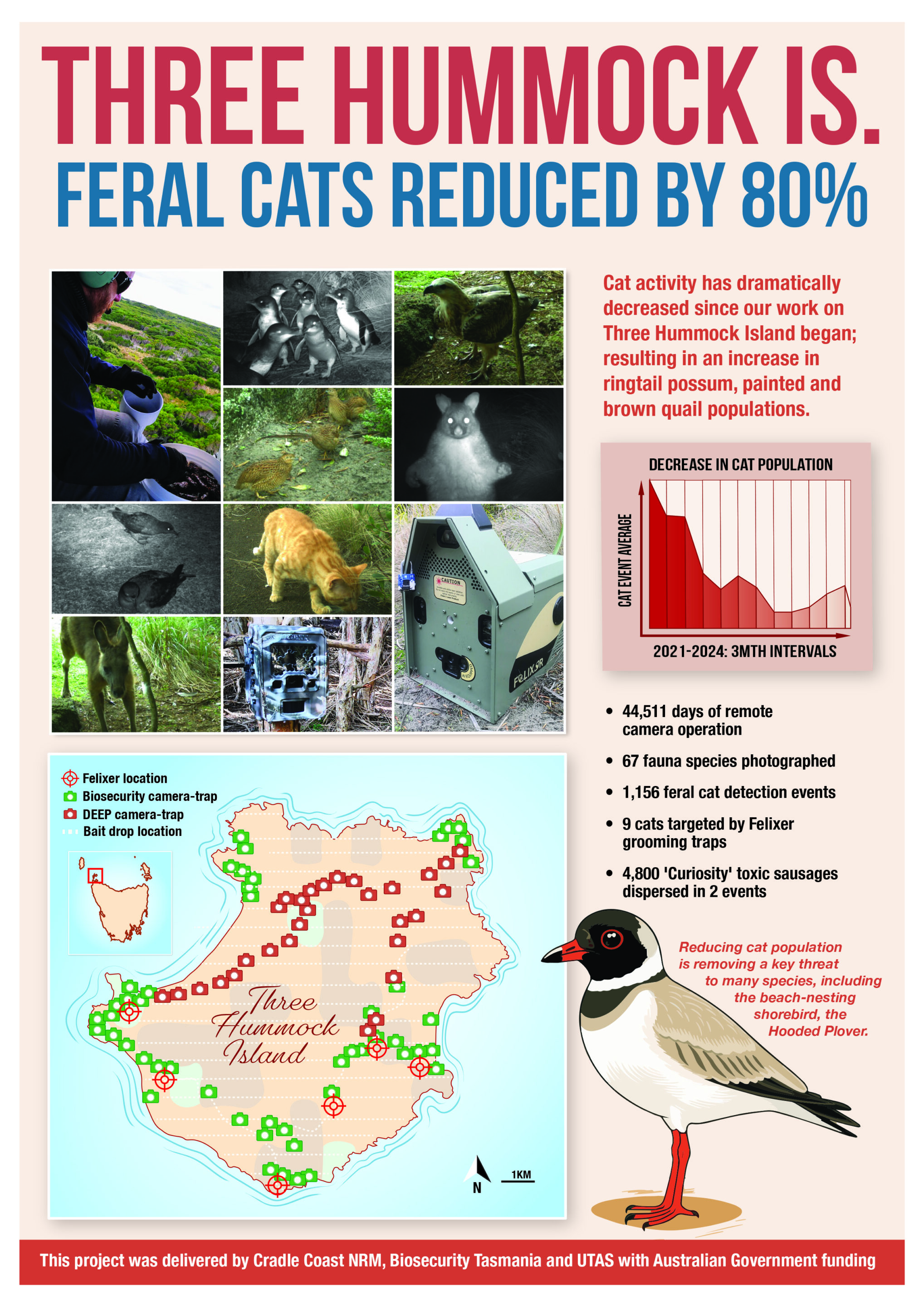
Cradle Coast NRM is working to create a stronghold for the Hooded Plover (Thinornis rubricollis), a priority threatened species, on Three Hummock Island by reducing feral cat predation, a significant threat to Hooded Plovers.
This project continues previous work partnering with Biosecurity Tasmania to protect coastal species including the Hooded Plover, Little Penguin and Short-tailed Shearwater, through the implementation of strategic feral cat control.

Image: Trail camera on Three Hummock Island
The project will address the threat of feral cats across Three Hummock Island (7000 ha). Feral cats have been known on the island since at least the 1950s, when some of the early farmers speculated that they had escaped or been released from visiting ships. Feral cats are listed as a threat to Hooded Plovers in the Australian Government’s Conservation Advice for the species. They are also known to hunt and kill other beach-nesting birds.
Hooded Plovers and Pied Oystercatchers were observed breeding on all sandy beaches on the island in 2006.
Five Felixer™ grooming traps will be maintained as well as a network of monitoring cameras across the island. Additional follow-up cat control activities are planned such as targeted baiting, particularly around shearwater colonies, and the use of detection dogs and a thermal drone to identify remaining cats with follow-up shooting or trapping.
Cradle Coast 2030 Strategy

Coastal and marine areas encompass a wide variety of landscapes and habitat types. Important coastal and marine areas can be identified by high value habitats or species. To enhance ecological, social, and economic values, identified Actions will build resilience to pressures and emerging threats across regional Priorities.
Duration: 2024-2026
Location: Three Hummock Island
Funding provider: Australian Government – Saving Native Species
Contact: Iona Flett, Water Coordinator
Phone: 03 6433 8449 Email: iflett@cradlecoast.com