
They might spend most of their time out of sight, but earthworms play an important role in maintaining healthy soils and productive pastures. From recycling organic matter to improving soil structure, these small but mighty soil engineers help support the natural processes that keep agricultural landscapes functioning. Through its Climate-Smart Agriculture Program, Cradle Coast NRM is exploring the benefits of earthworms and how their contribution to soil health can support sustainable farming practices.
Nature’s underground engineers
Earthworms do much more than break down organic matter. As they move through the soil, their burrows create channels that allow air and water to penetrate the ground, helping improve soil structure and water infiltration. Their feeding activity also helps recycle nutrients. By consuming organic material, including dead plant matter and livestock dung, earthworms produce nutrient-rich castings that return valuable nutrients to the soil.
These processes help create favourable conditions for plant roots and other soil organisms, supporting healthier pastures and productive agricultural land. Earthworms can also contribute to water management. Their burrows help rainwater soak into the soil rather than running across the surface, while the soil and its microorganisms help retain and process nutrients.
Meet the black-headed earthworm
One species of interest in the Cradle Coast region is the black-headed earthworm (Aporrectodea longa), a large, deep-burrowing species well suited to pasture-based livestock systems. Growing to around 10–17 centimetres long, it has a distinctive dark grey head and a flattened, spatula-like tail. In suitable soil conditions, it can create burrows extending up to two metres deep. Originally from southern Europe, the species is believed to have been introduced to north-west Tasmania during the nineteenth century, potentially through soil and earthworm egg capsules transported with agricultural materials as farming developed across the region.
Genetic testing of samples collected from Wivenhoe, Ridgley, Highclere, Cape Grim and Marrawah has confirmed the species’ identity across these locations. In established pasture systems, black-headed earthworms can help break down organic material, cycle nutrients and create channels for water and air movement. Their activity makes them an interesting example of how natural soil processes can contribute to agricultural productivity.
Sharing the benefits beyond Tasmania
The benefits of healthy earthworm populations are also being shared beyond the Cradle Coast region. Through an ongoing relationship with a South Australian farmer, black-headed earthworms are being collected in Tasmania and sent to South Australia to support soil health and pasture productivity.
The initiative follows a similar approach to dung beetle exchanges, connecting landholders with beneficial organisms that can support natural processes on farms. The transferred worms have been thoroughly washed and are subject to the relevant biosecurity checks and requirements, with the species confirmed as permitted for the exchange. By sharing knowledge and connecting farmers with practical approaches to improving soil health, initiatives like this can help build understanding of the role soil biology plays in productive and resilient farming systems.
Small creatures, big contributions
Earthworms are just one part of a complex soil ecosystem, but their contribution is worth recognising. By improving soil structure, recycling nutrients and supporting water infiltration, they help maintain the foundations of healthy pastures.
Understanding and working with these natural processes is an important part of building more sustainable agricultural systems across the Cradle Coast and beyond.
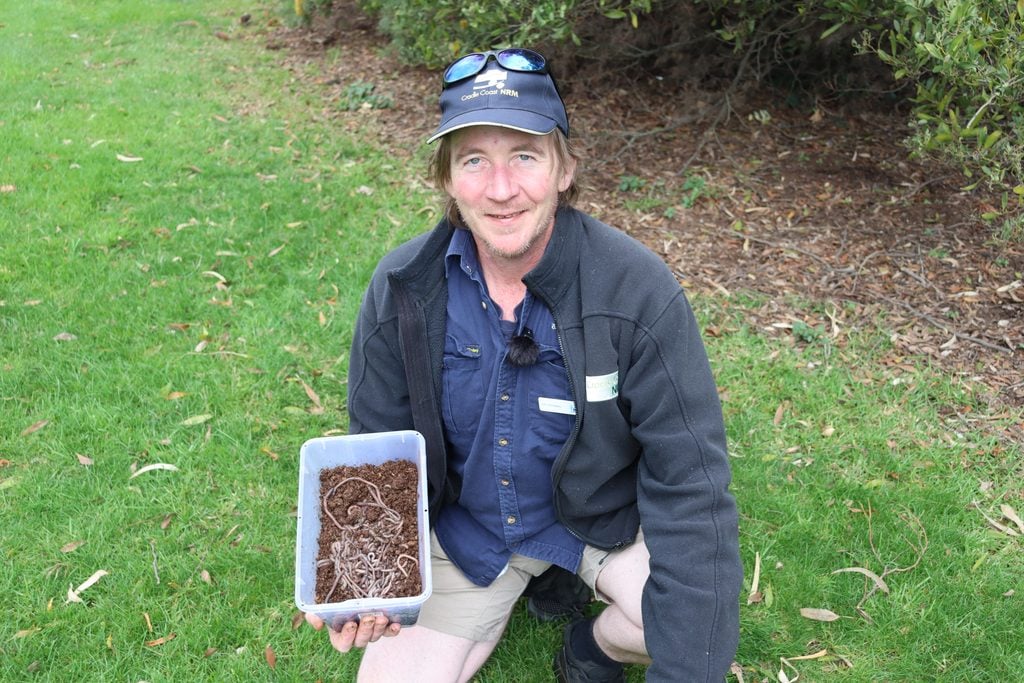
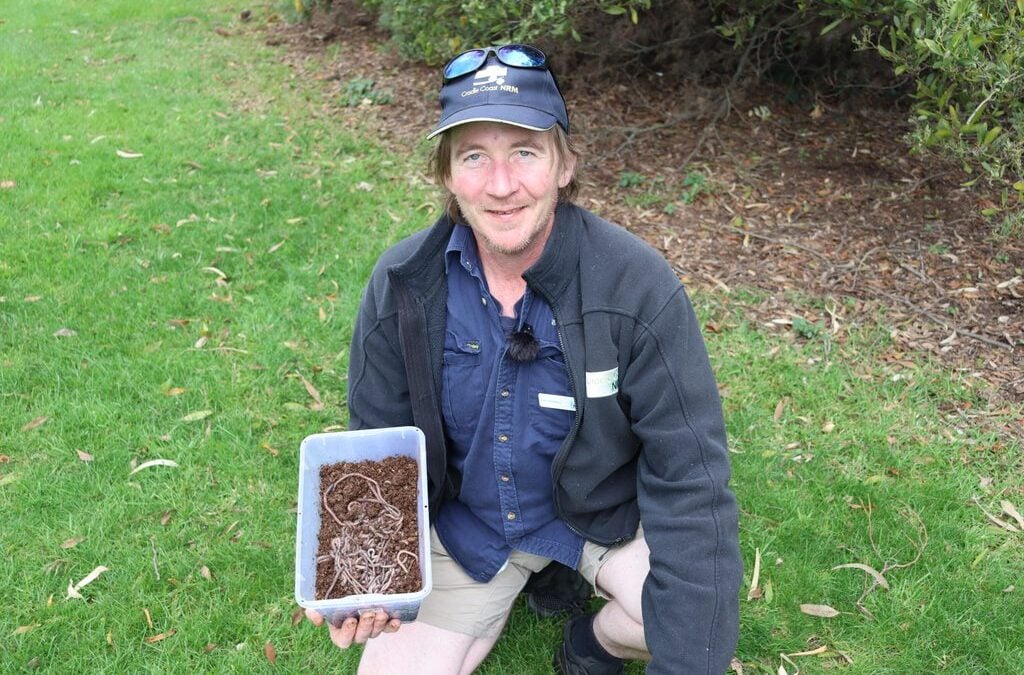
Tom holding a box of Black headed earthworms.
This project is supported by the Australian Government through funding from the Natural Heritage Trust under the Climate-Smart Agriculture Program and delivered by Cradle Coast NRM, a member of the Commonwealth Regional Delivery Partners panel.